

Career outcomes of our PhD graduates
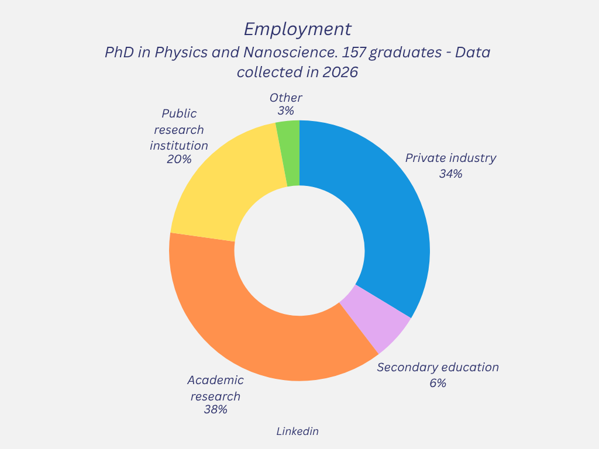
Graduates of the PhD programme in Physics and Nanoscience at the University of Modena and Reggio Emilia build careers in research, industry and education. The figures below are based on data on our alumni collected in 2026
Research
Most of our graduates continue to work in research. 38% work in academia, as postdoctoral researchers or as assistant, associate and full professors. They work at institutions including the Universities of Bologna and Padova, Friedrich Schiller University Jena, Imperial College London, EPFL and Sorbonne University.
A further 20% work at public research institutions. These include the National Research Council (CNR), CINECA and ENEA in Italy, as well as the Barcelona Supercomputing Center in Spain and EMPA in Switzerland.
In total, 58% of our graduates work in research.
Industry
At the same time, 34% of our graduates work in industry, in fields such as photonics, semiconductor engineering, data science, advanced manufacturing and energy. Their employers range from international companies such as Infineon Technologies, Applied Materials, Leonardo, Ferrari, Nokia and Apple to research-intensive SMEs and start-ups.
Education and other fields
6% teach physics and science in secondary schools. The remaining 3% work in other fields, including scientific publishing and the creative industries.
Geographical Distribution & Global Reach
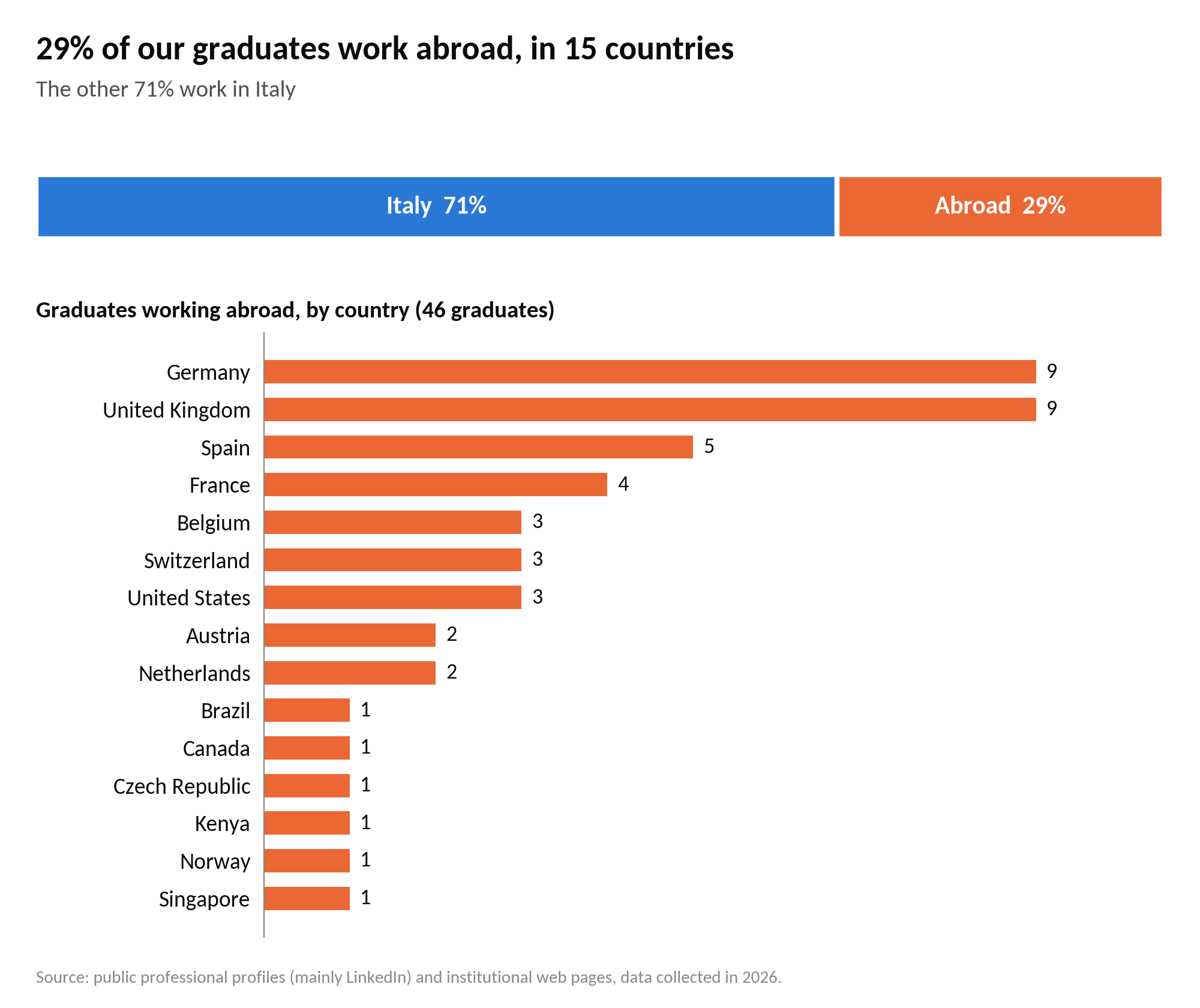
A PhD in Physics and Nanoscience opens doors both in Italy and internationally. 71% of our graduates work in Italy, while 29% (46 graduates) have taken their careers abroad, across 15 countries on four continents.
Europe is the main destination. The United Kingdom and Germany host the largest groups (9 graduates each), followed by Spain (5), France (4), Switzerland and Belgium (3 each), Austria and the Netherlands (2 each), and Norway and the Czech Republic (1 each).
Our alumni also work further afield, in the United States (3), Canada, Brazil, Singapore and Kenya (1 each).
Gender Demographics & Community
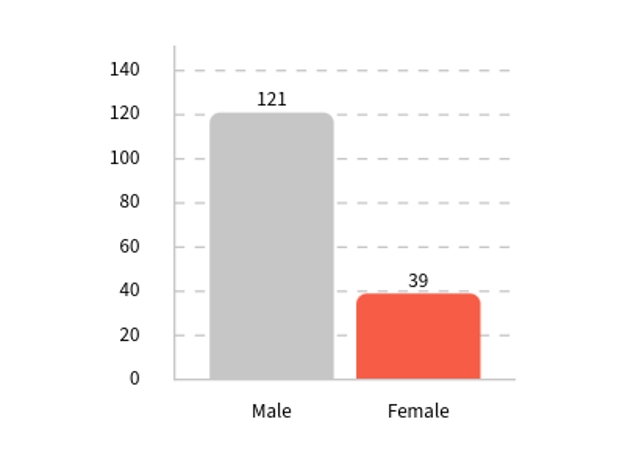
When it comes to demographics, our historical data reflects the broader ongoing trends within advanced physics and nanoscience studies. Out of 160 tracked graduates, 121 are men and 39 are women. As a department, we are actively committed to fostering an open, supportive, and inclusive community, encouraging diverse talent and working toward equitable representation across all our research fields and generations of scientists.